
Performance intelligence
A scientific profile built from real training evidence.
Turn recent attempts, completions, assistance changes and progression patterns into structured, model-based indices that help qualified coaches decide what deserves closer review.

Why it matters
A transparent analytical framework can make repeated training evidence easier to interpret, while keeping its limits visible.
- 01Four connected performance and safety indicators
- 02Relative model-based scoring from 1.0 to 5.5+
- 03Signals linked back to coaching evidence
- 04Clear limits and qualified human review
Built for UK gymnastics
Support the pathways and club structures used across the UK.
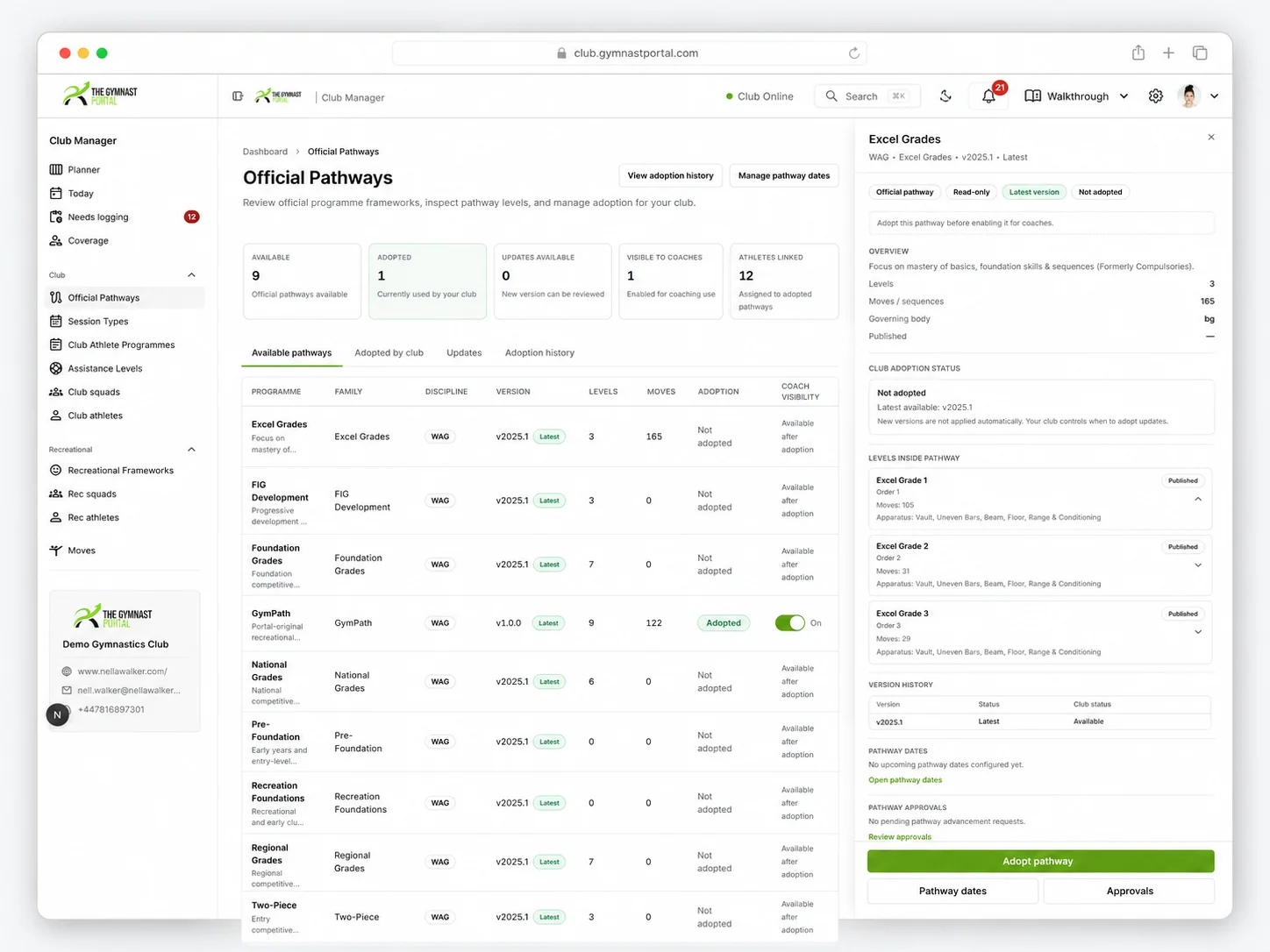
Configure recreational and competitive pathways around your club, British Gymnastics or the relevant home-nation governing body, while coaching decisions remain with qualified people in the club.
British Gymnastics and the relevant home-nation governing body · GBPFrom logging to profile
Build the profile from evidence already recorded in training.
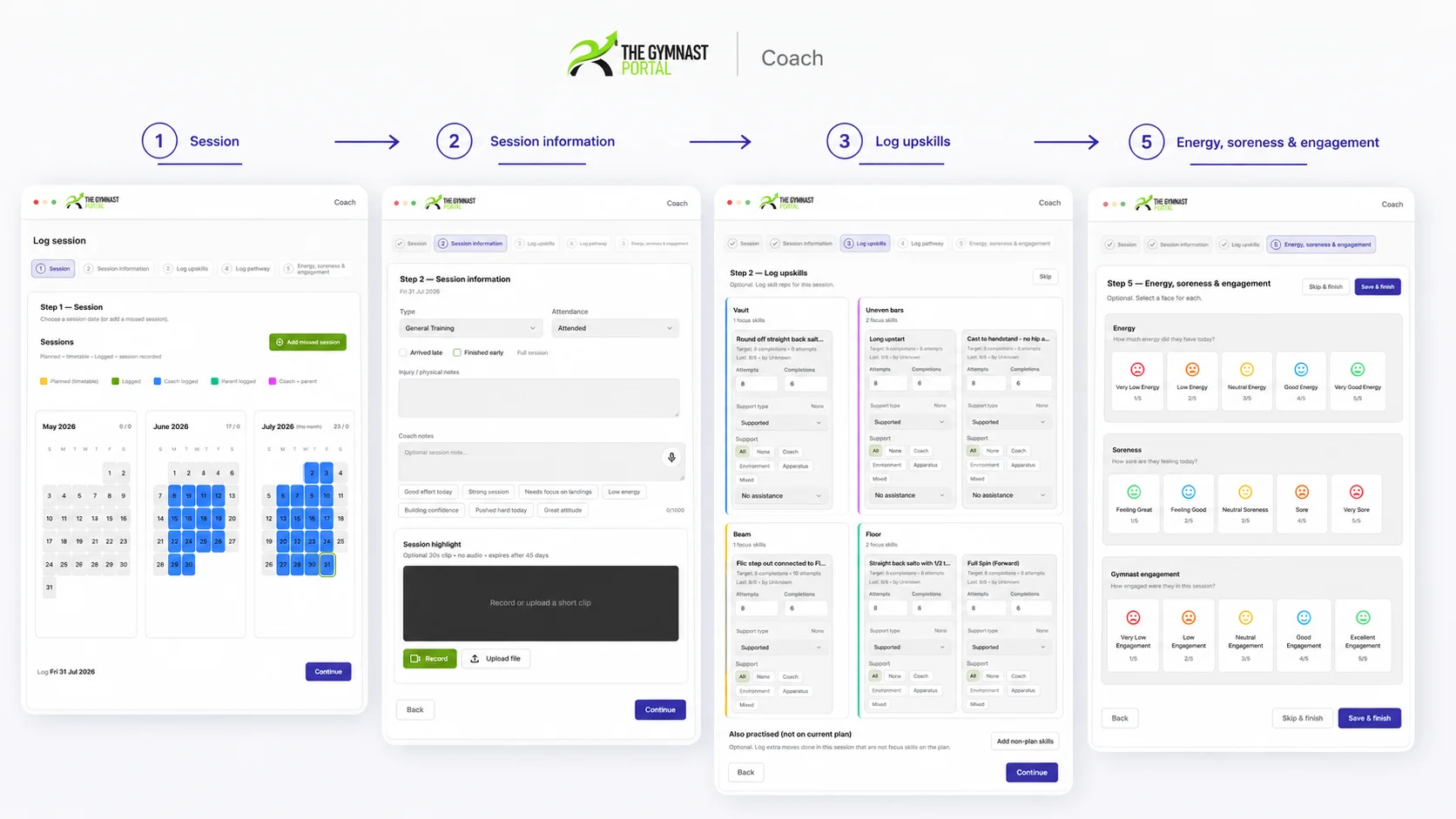
The Scientific Profile combines the movement being trained with recent logged attempts, completions, assistance and progression changes. It provides a structured view without asking coaches to maintain a separate assessment system.
The underlying movement values are assigned through an AI-assisted synthetic sports-science model. Recent athlete evidence then places those values into a developing training context. The result is analytical decision support, not direct measurement from force plates, metabolic testing or a clinical assessment.
- Movement classification and skill values
- Attempts and completions
- Assistance-level changes
- Recent progression patterns
The four indicators
Understand what each index represents.
BLIR, MDRI and PSYL describe different theoretical demands of a movement. The separate Safety indicator brings recent safety-related platform evidence into the same review. They should be read together and traced back to the relevant skills and sessions, never treated as independent verdicts.
The current scale runs from 1.0 for comparatively low demand to 5.5+ for movements or sequences with substantially greater modelled demand. It is a relative scale designed to preserve logical progression between skill families, not a probability of injury or a measurement of an individual athlete.
- BLIR: Biomechanical Load & Injury Risk Index
- MDRI: Metabolic & Dynamic Rate Indicator
- PSYL: Psychological Stress & Anxiety Level Threshold
- Safety: a separate recent-evidence indicator, subject to calculation verification
Metric definitions
Biomechanical load, metabolic demand and psychological complexity.
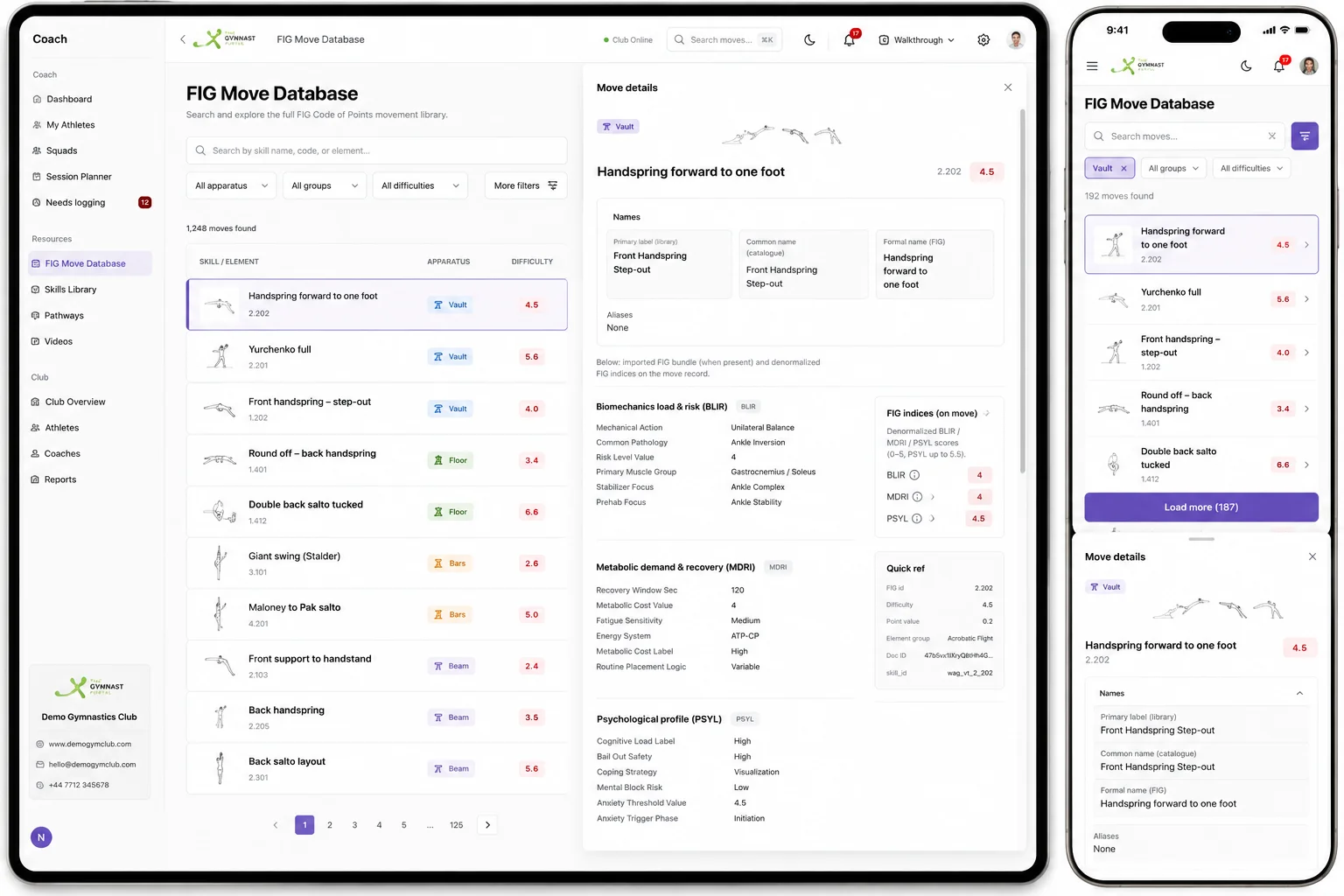
BLIR models the relative physical stress associated with a movement, including landing impact, repetitive wrist and shoulder loading, and relevant flexion, extension or shear demands. A low value reflects comparatively limited modeled load; higher values represent greater peak impact or joint-force demand.
MDRI models relative energy-system demand, anaerobic power and fatigue accumulation. PSYL models perceived risk, spatial orientation, cognitive load and fear threshold, including factors such as direction of rotation, visual spotting, apparatus height and release or regrasp demands.
- Mechanical impact maps to BLIR
- Energy-system demand maps to MDRI
- Spatial and perceived risk maps to PSYL
- Mechanical complexity contributes to the movement base value
Supporting framework
Use one movement language across skills and pathways.
The Universal Movement Taxonomy, or UMT, is the platform’s classification layer for mapping movements across apparatus and skill families into consistent digital records. Its base value reflects relative difficulty and mechanical complexity within the model.
The wider framework may also use progression prerequisites, motivation and autonomy considerations, and physical-preparedness requirements. These are represented through the platform’s YSL, SDT and CSP parameters. They provide structured developmental context; they are not FIG judging criteria or clinical assessments.
- UMT: movement classification and base value
- YSL: structured youth skill progression
- SDT: autonomy, competence and relatedness context
- CSP: conditioning and physical-preparedness requirements
Derivation and assignment
See how movement values are assigned.
Movement ratings are produced through AI-assisted synthesis of recognised gymnastics code information with general principles from sports biomechanics, exercise physiology and motor learning. Each movement is considered across mechanical impact, energy demand, spatial or perceived risk, and mechanical complexity.
Values are internally normalised on the continuous 1.0 to 5.5+ relative scale so that progression remains coherent across movement families. They describe theoretical demand under assumed execution conditions. They have not been produced from live telemetry or individual laboratory testing for every gymnast or attempt.
- AI-assisted model assignment
- Four-variable relative grading
- Internal cross-family normalisation
- Versioned methodology and movement governance
Trends over snapshots
Look for movement, disruption and unusual change over time.
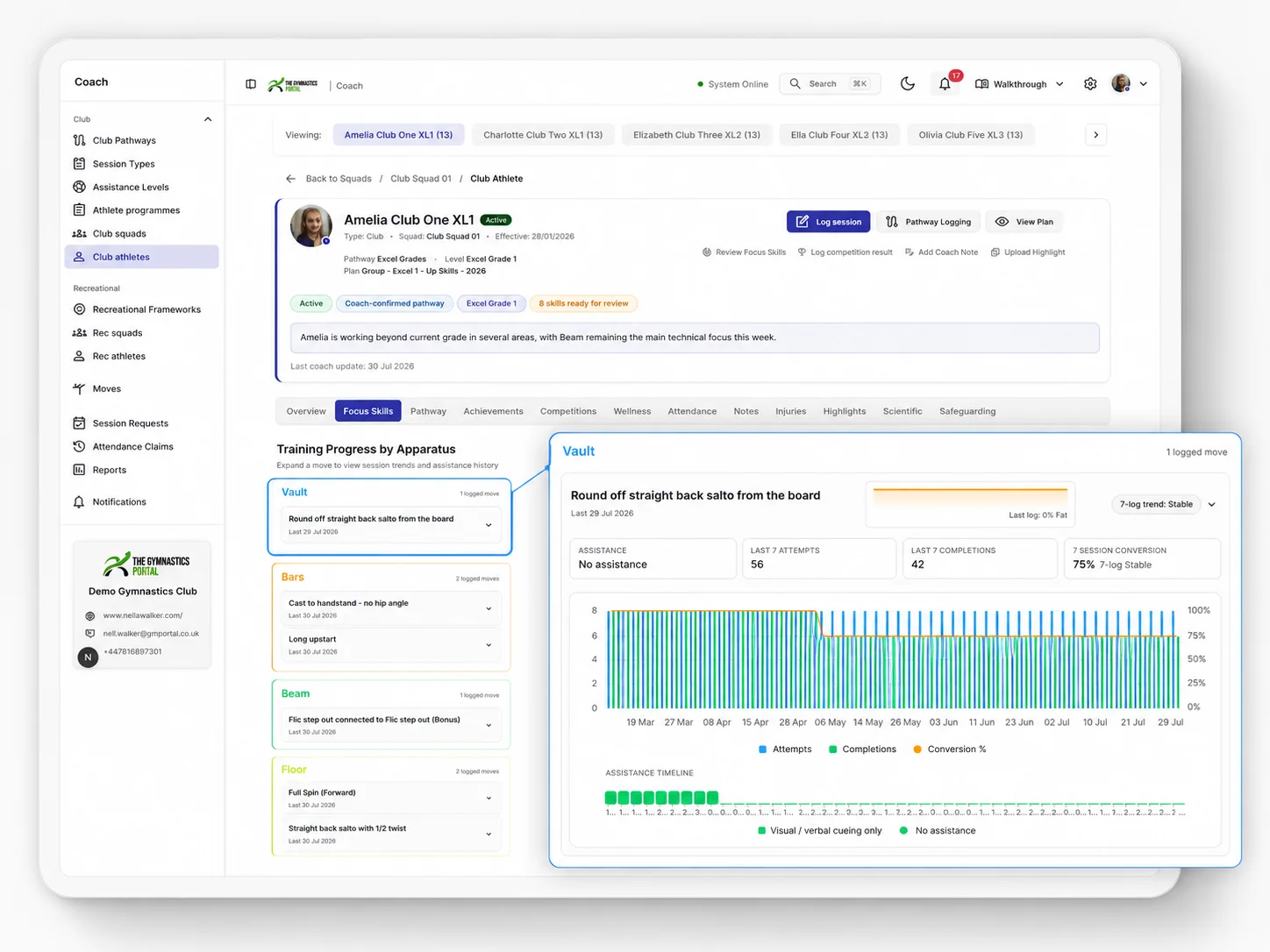
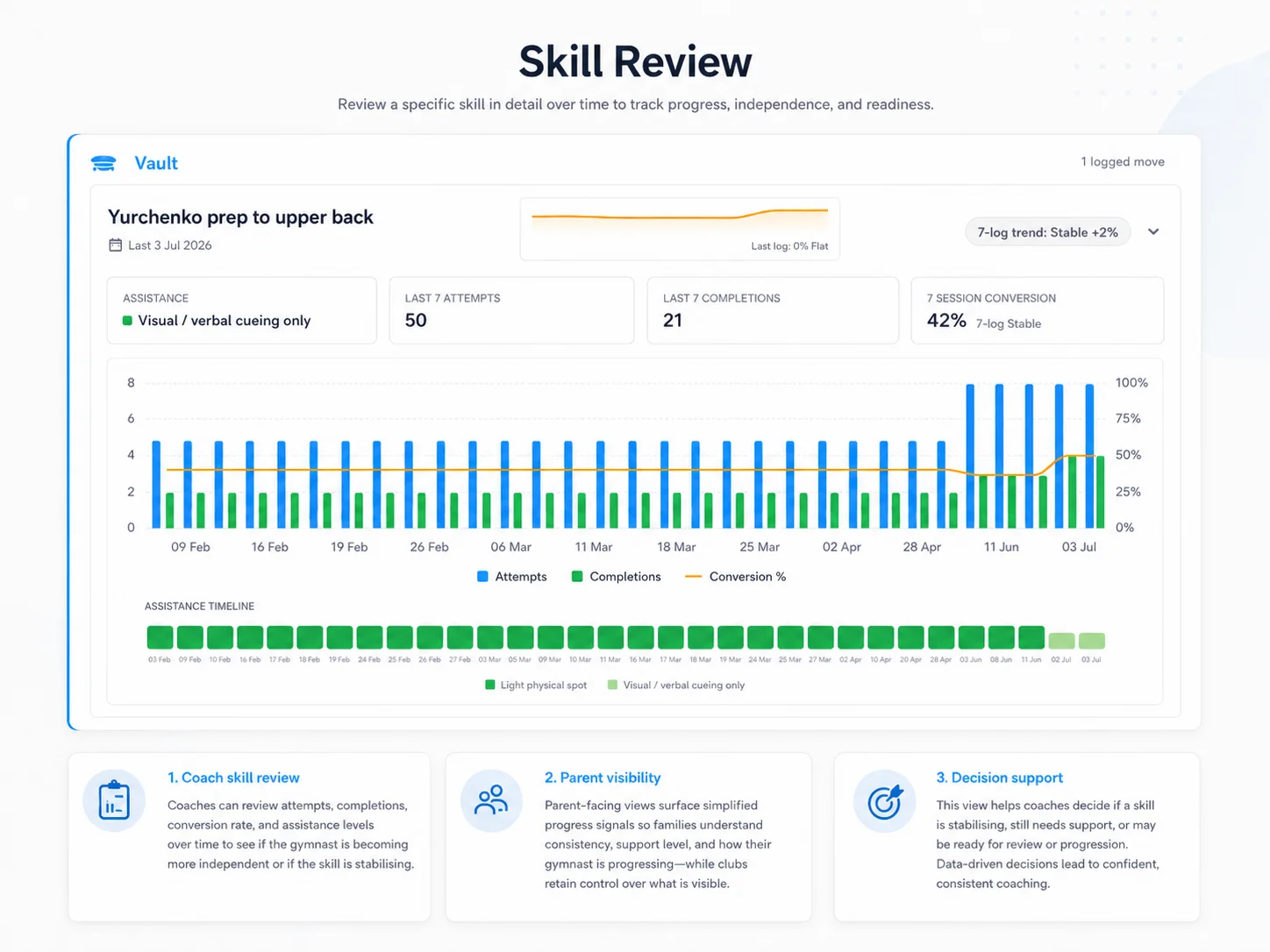
A single score provides limited context. Trends can reveal a sudden rise in training load, increasing assistance, repeated safety breaches, disrupted progression or a return to activity after time away.
The useful question is not simply whether an index is high or low. It is what changed, when it changed and which recorded evidence may explain it.
- Changes across recent sessions
- Load spikes and repeated attempts
- Increasing or reducing assistance
- Stalled or returning progression
Signal to review
Move from a signal to the evidence behind it.
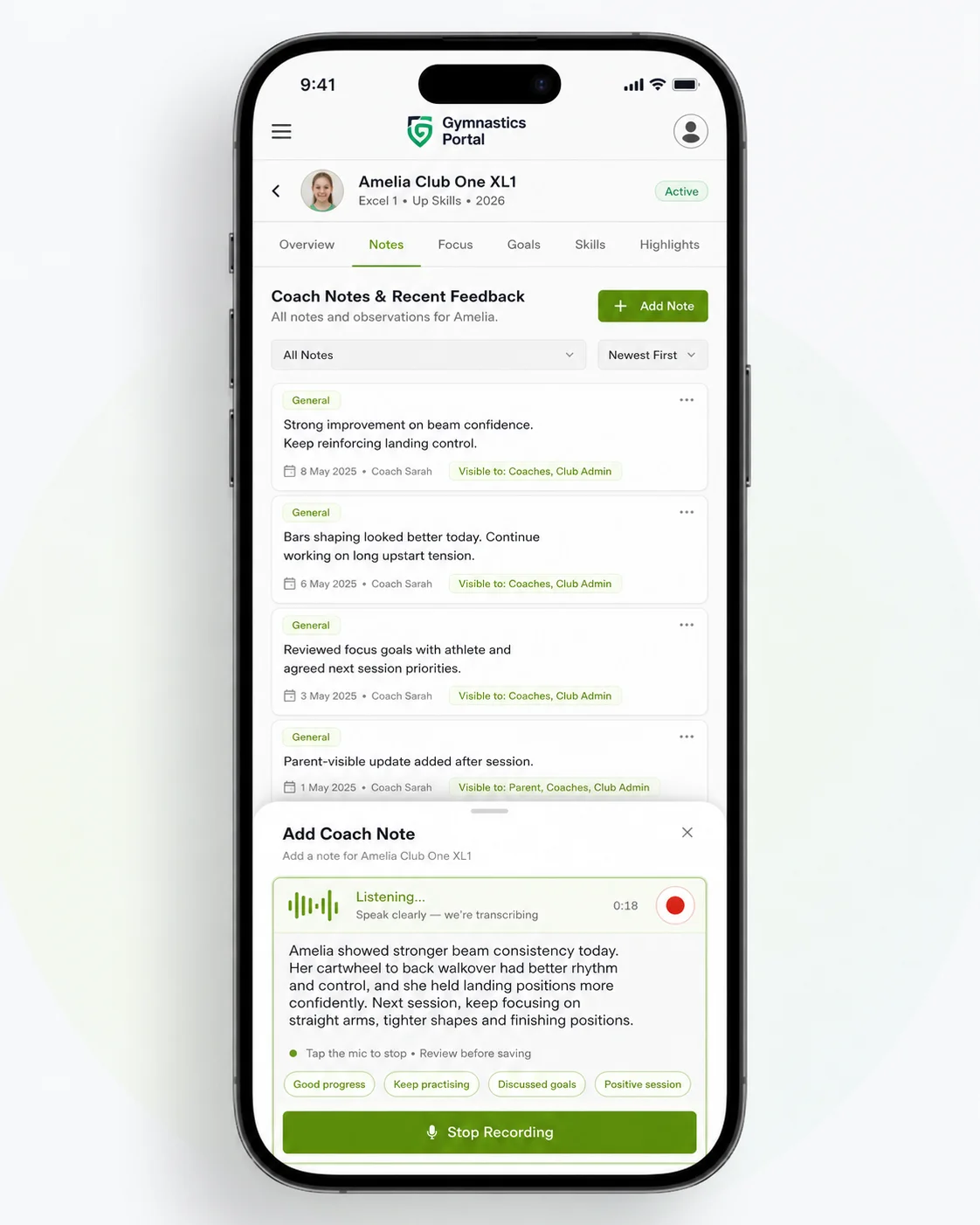
When a profile draws attention to a pattern, authorised users can review the associated skill history, session logs, coach notes and selected video. This keeps the conversation grounded in evidence that coaches recognise.
The resulting response remains a human decision. A coach may adjust planning, seek more context, speak with the athlete or refer an issue through the club’s established process.
- Review the relevant skill history
- Read the coaching context
- Inspect selected video evidence
- Record an informed response
AI-assisted overview
Bring the relevant evidence into a concise overview.
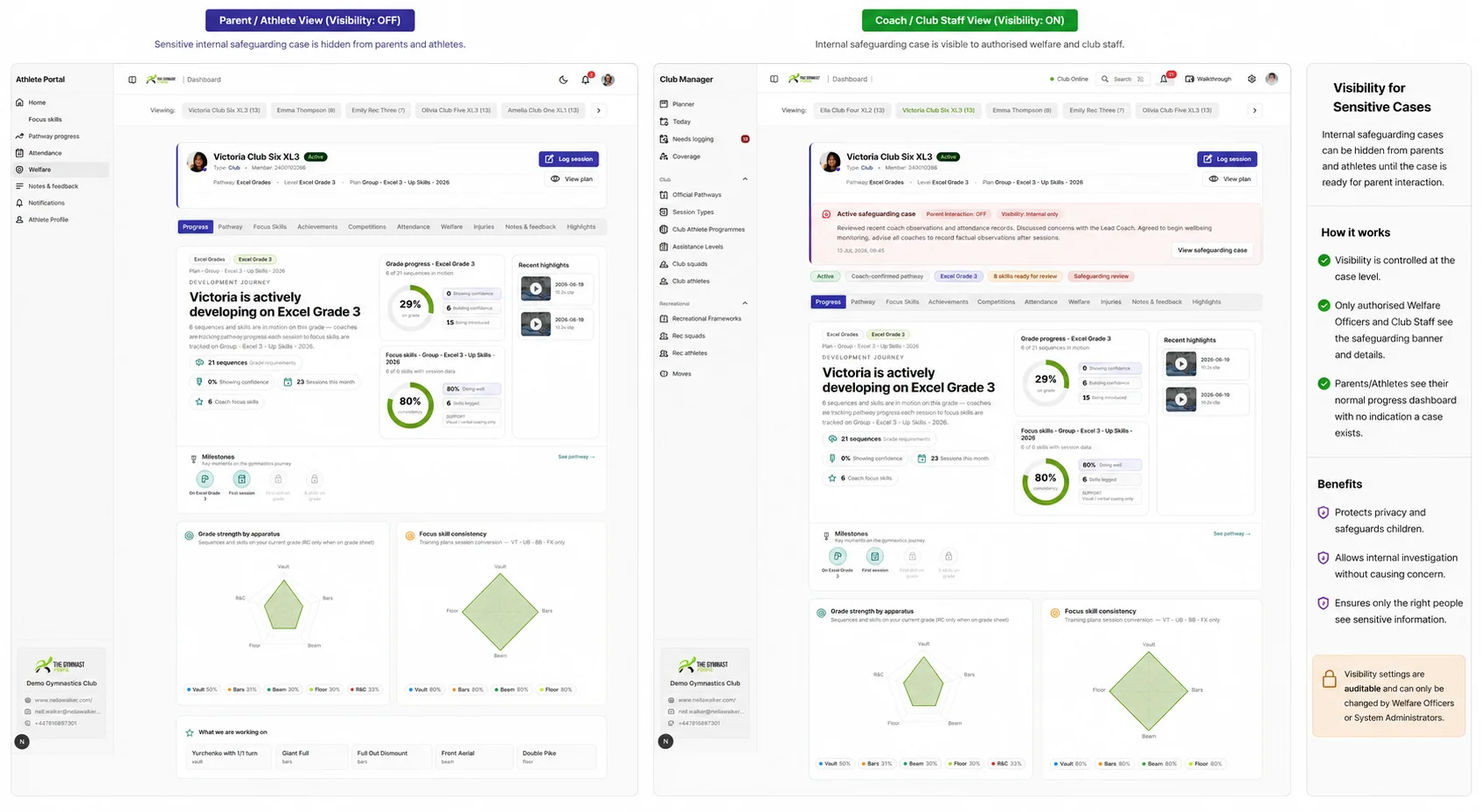
AI-assisted overviews can summarise recorded progression, recent session activity and coaching context so authorised users can understand where to look next. They sit alongside the calculated Scientific Profile rather than changing or replacing its indices.
Generated interpretation is kept distinct from recorded facts and should direct the user back to the underlying evidence. Permissions continue to apply, so an overview cannot reveal information the user is not authorised to access.
- Grounded in recorded platform evidence
- Separate from calculated indices
- Links back to supporting records
- Respects role-based permissions
Transparency and accuracy
Use the profile as decision support, not diagnosis.
BLIR, MDRI, PSYL, Safety, YSL, SDT, CSP and UMT are custom modelling parameters proprietary to The Gymnastics Portal. They are educational, analytical and developmental guides. They are independent of FIG and national governing-body judging, difficulty or execution criteria.
Scores are theoretical relative estimates under assumed execution conditions. An athlete’s experience can differ because of technique, conditioning, injury history, fatigue, equipment, surface and other circumstances. Performance Intelligence does not diagnose injury, prescribe training, make safeguarding decisions or automatically approve or prevent a skill.
- Not official FIG or governing-body scoring
- Not live biomechanical or metabolic measurement
- No medical or safeguarding conclusion
- Qualified human review remains essential
Frequently asked questions
Questions about this part of the platform.
Do the scientific indices make coaching or medical decisions?
No. They support qualified review; they do not diagnose injury, approve skills or replace human judgement.
What evidence is used?
Relevant logged activity such as attempts, completions, assistance changes and progression patterns, subject to published model definitions.
See it in your club